
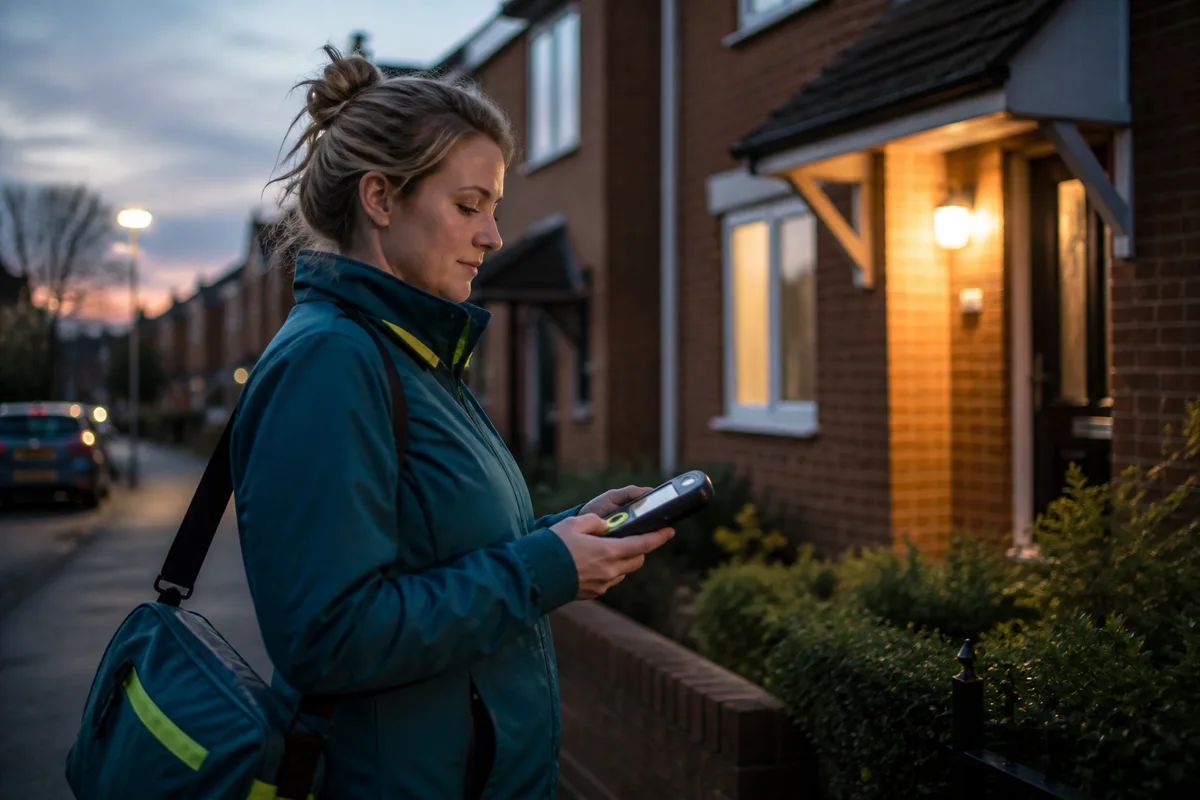
A lone-worker device is one control within a wider safety system. It does not replace risk assessment, supervision, training or an emergency plan.
The Health and Safety Executive states that employers must manage health and safety risks before people work alone. Its lone-working guidance highlights training, supervision, monitoring and support.
Begin with tasks and environments
Identify who works without close supervision, where, when and with which hazards. Consider violence and aggression, travel, remote locations, medical suitability, communication coverage, manual handling and delayed discovery after an incident.
Consult workers. They understand practical dead spots, visit patterns and barriers to using equipment.
Define the response requirement
Translate hazards into actions. Does a worker need a discreet SOS? Two-way voice? Location information? A timed check-in? A professional monitoring centre? Incident recording?
Specify who receives each alert, how they verify it, how quickly they respond and when emergency services are contacted. Include no-speech events and loss of communication.
Assess the device in context
Footprint is a wearable GPS device with SOS, two-way hands-free communication, mobile connectivity and a secure location portal. OwnFone states that it is BS8484 compliant and can be configured to an alarm receiving centre or line manager with an escalation process.
Confirm the precise service, certification scope and monitoring arrangement required for your organisation. Review Footprint for lone workers.
Test real working conditions
Pilot across buildings, rural routes, vehicles, basements and out-of-hours shifts relevant to the role. Test mobile coverage, GPS availability, audio, wearing position and how quickly the response team can interpret the alert.
Train the whole pathway
Workers need to know when and how to activate the device, how to charge and test it, and what will happen next. Responders need scenario training and access to current worker information.
Learn from use
Review activations, near misses, false alerts, missed check-ins and device non-use. Ask whether the control changes behaviour or creates a new burden. Update the risk assessment after incidents and material changes.
A strong system connects hazard, worker action, reliable communication and a rehearsed human response. Contact OwnFone to discuss a professional Footprint configuration.