
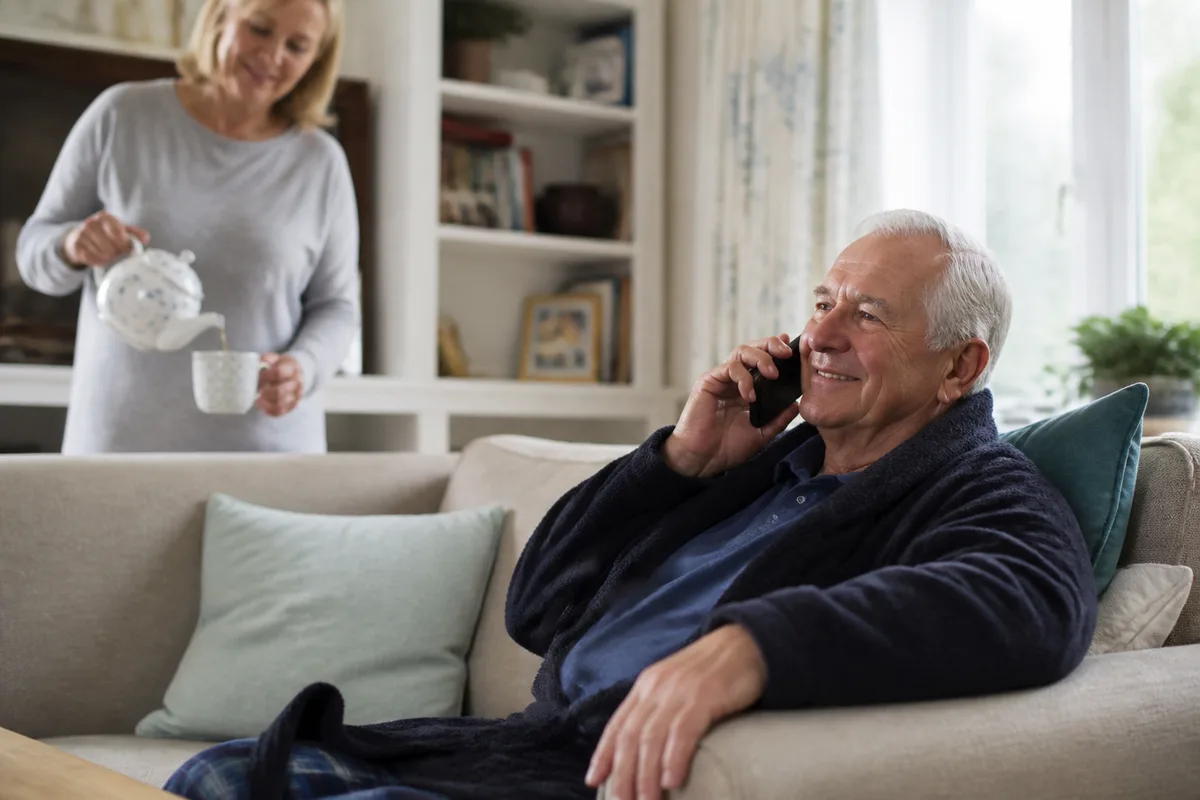
Memory difficulties can make a once-familiar mobile phone harder to use. Menus change, passwords are forgotten and a contact list can become an obstacle between the person and a reassuring voice.
A simpler phone may support some people, but there is no single solution for everyone living with dementia or memory change. Decisions should reflect the person’s abilities, wishes, routines and wider support plan.
Build on recognition
Familiar faces, names and colours can be easier to recognise than numbers or abstract icons. A contact button showing a clear recent photograph may help connect the intention—“I want to speak to Alex”—with one visible action.
Choose cues with the person, not for them. Test photographs and labels before fixing the layout. Avoid similar images and keep the most important contacts in memorable positions.
Keep the sequence short and stable
Every additional step creates another point where the task can break down. One-touch calling removes the need to unlock a screen, find an app and scroll. Once a layout is learned, avoid rearranging it without a good reason.
OwnFone can be prepared with up to 12 selected contacts using names, photographs or high-visibility buttons. It arrives programmed and focuses on calls rather than apps or changing menus. Read how OwnFone works.
Create an everyday routine
Keep the phone in one visible place or use a lanyard if the person is comfortable wearing it. Put charging into an existing habit, such as after breakfast or before a favourite programme. A simple visual reminder beside the charger may help.
Practise calls when everyone is relaxed. Avoid framing the practice as a test. Repetition through enjoyable, ordinary conversations is more useful than a long instruction session.
Agree how contacts will respond
Family and carers should know what to do if a call is silent, repeated or ends suddenly. Keep an up-to-date response plan and avoid assuming a phone provides monitoring or emergency response unless that service is explicitly in place.
For location and SOS features, a separate GPS personal alarm such as Footprint may be worth discussing as part of a wider assessment. Technology should complement—not replace—appropriate care, professional advice and emergency arrangements.
Review with dignity
Check regularly whether the phone still helps and whether the person still wants to use it. The aim is meaningful connection and independence, not surveillance or compliance.