
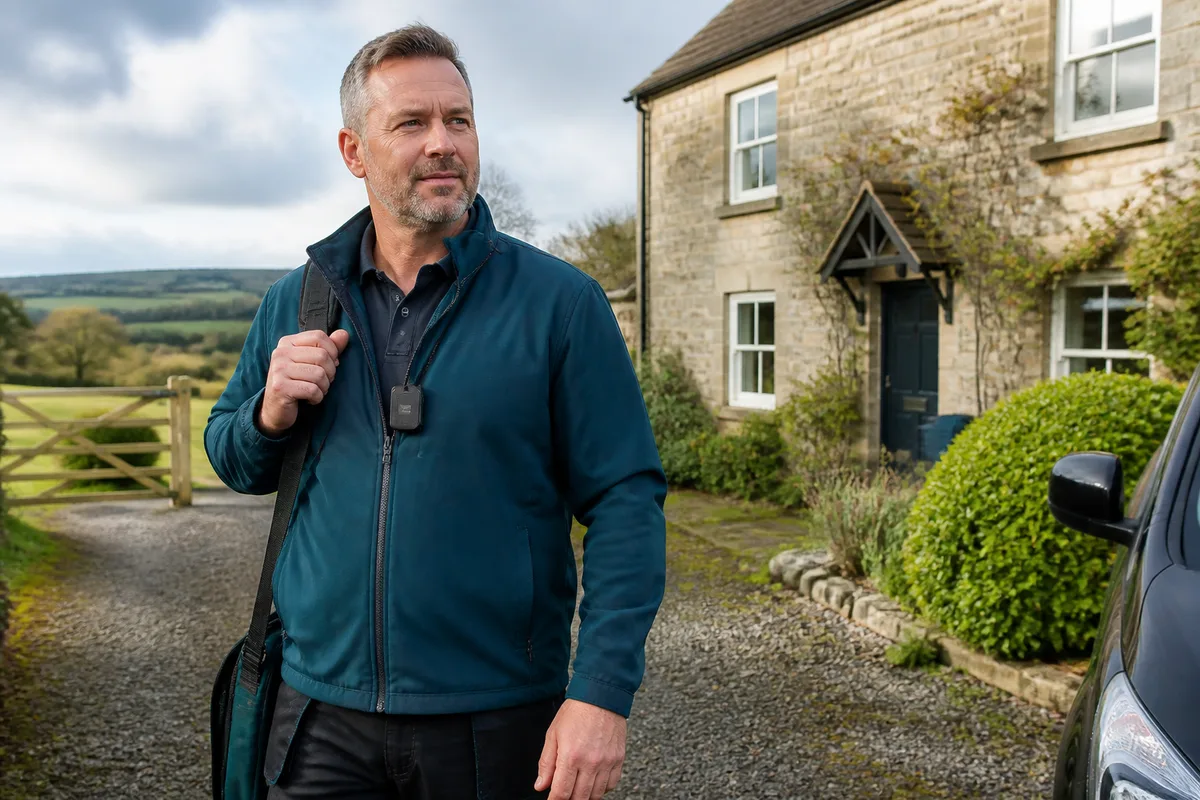
A geofence is a virtual boundary drawn around a real place on a map. When a compatible GPS device enters or leaves that area, the system can send an alert according to its configuration.
It is a useful tool for some families and services, but it is not a physical barrier and should not be described as one.
A simple example
A family might create a zone around home or a familiar neighbourhood. If the Footprint device leaves or enters the configured area, paired contacts can receive an alert. OwnFone states that families can create up to three geofenced areas for Footprint.
The alert tells contacts that the device crossed the digital boundary. It does not explain why. The person may be taking an agreed journey, travelling in a car or standing near the edge while location accuracy varies.
What affects location and alerts
GPS performs best with a clear view of the sky. Buildings, indoor environments, device position, network availability and battery can affect the information available. Boundaries should allow a reasonable margin rather than tracing a doorway precisely.
Always test zones in the real environment and understand how the selected product reports uncertainty or delay.
Agree the purpose and response
Before enabling a geofence, discuss:
- what independence goal it supports;
- who receives alerts;
- when they will call rather than immediately attend;
- how often location will otherwise be checked;
- how consent and privacy will be reviewed.
Geofencing should not become continuous family surveillance. Use the least intrusive arrangement that meets the agreed need.
Geofencing and dementia
Location technology may form part of support for some people living with dementia, but suitability is individual. It does not prevent someone becoming lost or replace care planning, professional assessment and emergency procedures.
Footprint safe zones
Footprint combines location requests, family pairing, safe-zone alerts, SOS and two-way voice. Read the current family product explanation, then discuss expectations with every paired contact before ordering.
A well-designed geofence creates a useful prompt for a calm response. It should expand confidence, not silently shrink the person’s world.